Agafay: stone, not sand
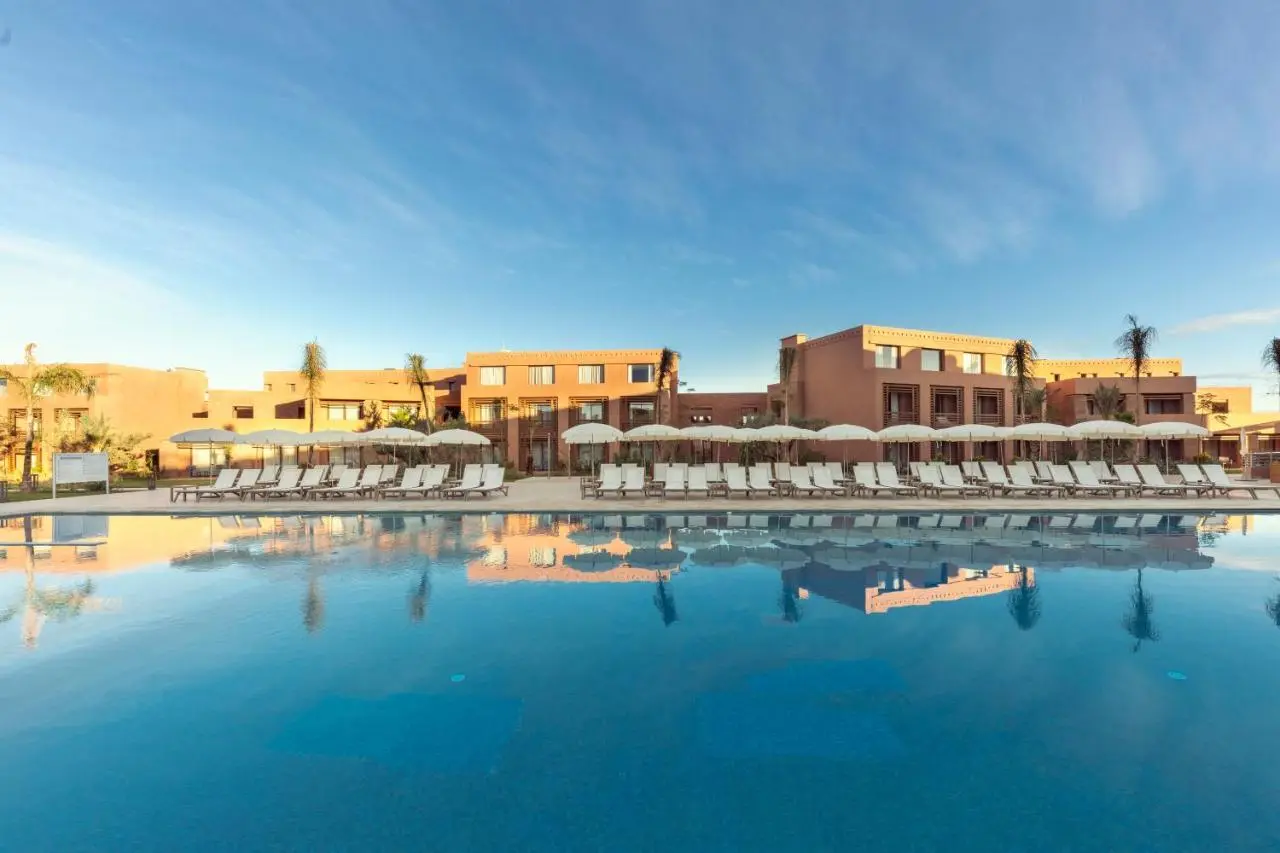
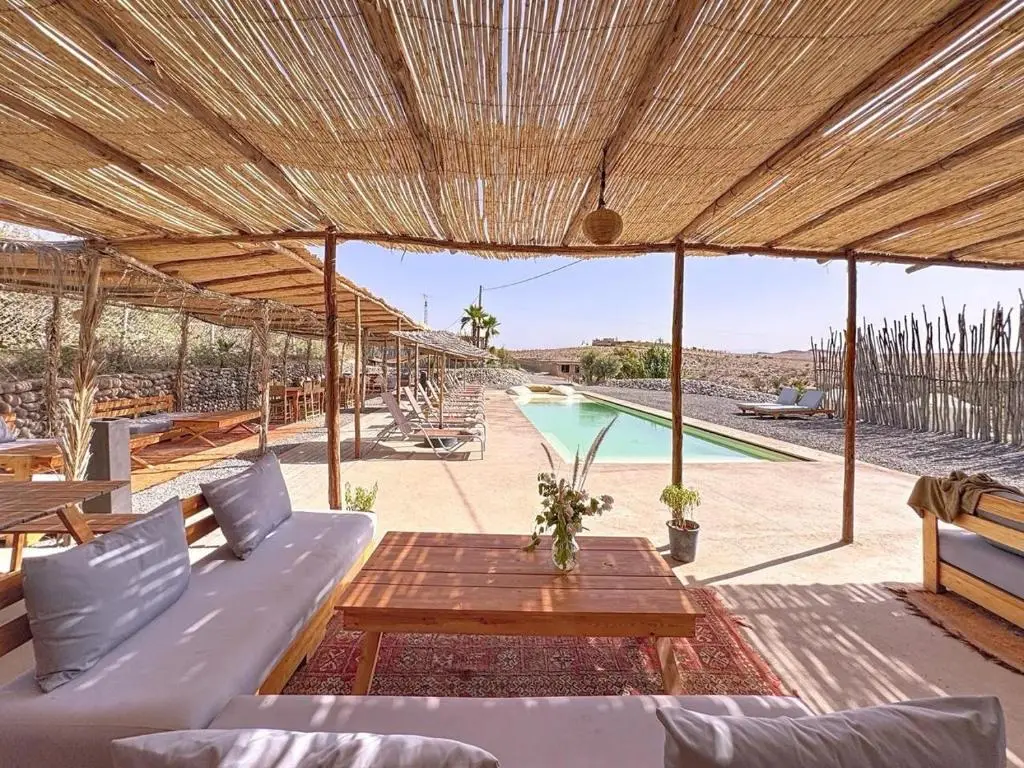
Agafay is about thirty to forty kilometres south-west of Marrakech, three quarters of an hour to an hour by road. It is a stone desert: bare hills, dry gullies, the Atlas on the horizon. No dunes.
That does not make it less beautiful, but it is something other than the picture in your head. What you get there is an evening and a night: the drive in low light, dinner at a camp, silence and a sky full of stars with no city light, and by ten the next morning you are back in Marrakech.
Agafay is the right choice if you have four or five nights and do not want to give up the city. It fits onto the end of a city stay without costing you a travel day.
Zagora and Merzouga: the real dunes
Zagora is about 350 kilometres from Marrakech: six to seven hours over the Tizi n’Tichka and down the Draa valley with its palm groves and kasbahs. The dunes there are smaller, but it is sand and it is the Sahara. Feasible as a two-day trip.
Merzouga, at Erg Chebbi, is over 560 kilometres away: nine to ten hours. These are the postcard dunes, tens of metres high. That is not an excursion but a route: you go via Ouarzazate and the Todra Gorge and return via Fès or Midelt, or the other way round.
The rule of thumb: Merzouga needs at least three days, and even then you will have slept there one night. Anyone trying it in two days spends most of it in the car.
What a night at the camp is really like
Camps vary enormously. Before you book, ask three things: whether the tent has its own bathroom, whether there is electricity in the evening, and whether you drive right up or have to cover the last kilometres by camel or quad bike.
In winter the Sahara gets cold at night, sometimes around freezing. Good camps have blankets and a stove; either way take a jumper and long trousers, however hot the day was.
The camel ride at sunset usually lasts an hour to an hour and a half. For most people that is exactly enough. With a bad back or small children you can perfectly well ask to go to the camp by car; that is almost always possible.